News
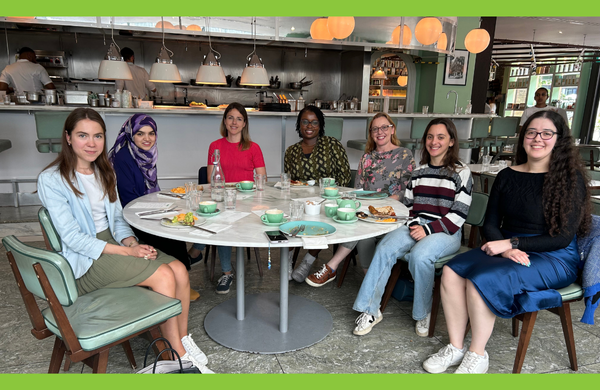
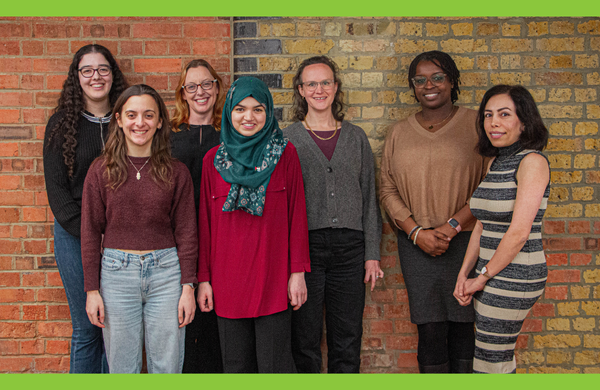
Throughout the summer, we were joined in the office by six university students. Three of them, Vritika (University of Sheffield), Howraa (University College London) and Ella (University of Leeds), sat down with graduate engineer Tungsten Tang at the end of their placements, to reflect on their time with us at DMag before returning to university for their final years.
[The office] is a really collaborative environment. It just feels like one really big team working together. Everyone is so friendly and happy to help.
What first inspired you to want to pursue structural engineering?
Ella: I remember when I was maybe 9 or 10, on a family holiday we were driving by the Millau Viaduct. I made my dad stop the car so that I could get out and have a look at the bridge before we went over it. Everyone was so upset, everyone wanted to be home… but I was like, “No, everyone stop.” I was just so impressed by how big it was, and how you can make something that’s obviously practical, but also looks nice as well — that was the first structure that really impressed me.
Also, I had a bit of an obsession with the 2012 Olympics — I used to drive past the Olympic Park quite a lot with my parents and seeing that go up in stages was interesting, and I wondered how you get all those buildings to actually stand up.
Howraa: I remember just looking at my brother standing on my desk to get something from the wardrobe, and seeing the slab of the desk bend so much without breaking. And now looking back at that moment, the more you learn about structures, it’s like, oh, I get it now, that’s what was happening.
Vritika: When I grew up, we’d only come into Central London on a special occasion or when the weather was particularly nice, and over the years we would see the London skyline changing. When you’re smaller, these buildings seem so big and a little crazy they even stand up.
How has it felt to work on live projects, compared to studying at university?
Vritika: At university a lot of things are laid out in front of you, like the properties of materials or the dimensions of a problem. But on a real project you have to figure out those parameters yourself in order to get to a solution.
Ella: Yeah, in reality, you’re dealing with missing information, or you make assumptions and later you get the information that you are missing— you have to go back and redesign it, it’s more like an iterative process, often a lot trickier than the ones that I’ve dealt with at university.
Howraa: I think the main difference was seeing the flow of how everything come together with a project, like how this slab design ties into that connection design. At university you design one slab or one beam at a time and it all feels very separate.
How did you find working in the office?
Howraa: I think it’s a really collaborative environment. It just feels like one really big team all working together — it doesn’t feel like people working on different projects are isolated from each other.
Vritika: The social aspect of it is really nice, something that I had no expectations for, but somehow my expectations were exceeded. And everyone is so friendly and helpful: if you have a question during your work, you can anyone and they are all really receptive and happy to help.
I’ve worked with so many different people at all different levels, from fellow placement students and graduate engineers, to directors.
Ella: Within the office, I’ve worked with so many different people at all different levels, from fellow placement students and graduate engineers, to directors. And in a design team meeting, I also got to see how different parties contribute to a construction project. It was a lot of people posing problems and everyone solving them all together, not just reporting on what we did, but trying to bottom out a feasible solution. It’s been a much quicker learning curve for me because I’ve been involved in such an integral part of the project and witnessed the coordination.
Was there anything about your placement that surprised you or you weren’t expecting?
Howraa: I was surprised by how much real work I was able to do, contributing to projects and designing elements that will actually be used in a real project. in some places you’ll either be doing the same thing again and again, or they don’t trust you with a lot of things.
I was surprised by how much real work I was able to do, contributing to projects and designing elements that will actually be used in a real project.
Vritika: I also didn’t realise how important it is to go to site, and how much you can discover by looking at an existing building. I’d never been on site before, but I’ve been to two very different sites over my time here. What I found is you can’t really get the full picture of a building just by looking at some sketches on a piece of paper, until you go outside and see it in person, to validate your assumptions.
Which cake that you’ve had here was your favourite?
Ella: The whole DMag cake tradition was my favourite thing ever. To be honest, I got cake almost every single day. I’ve never eaten more cake in my life. Every occasion can be cake-related!
The whole DMag cake tradition was my favourite thing ever.
Vritika: I think Chloe’s Bake Off surprise cake was quite fun, where we had to guess the flavours. It was homemade and it was interesting and different.
Howraa: Jess’ Canadian bars were really good, unlike anything I’ve had before.
For more details on our graduate and summer placement opportunities, and how to apply, see our Careers page.