News
Published on the 19th June 2025, the long-awaited National Standards for Sustainable Drainage Systems (SuDS) mark a major step forward in how surface water is managed across England.
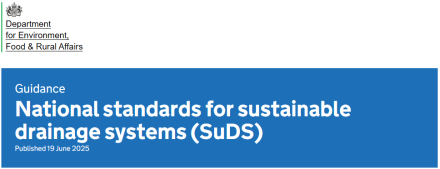
This isn’t a minor policy refresh – it’s a comprehensive rethink of SuDS as an integrated tool for climate resilience, water quality, urban amenity, and biodiversity.
What’s Changed Since 2015?
The previous (2015) guidance was non-statutory, focused mainly on hydraulic performance, dealing with peak flows, storage volumes, and limiting discharge rates. The new 2025 standards raise the bar significantly, with seven integrated standards covering:
• Surface water destination hierarchy
• Pollution control
• Everyday rainfall interception
• Managing extreme events
• Amenity and biodiversity integration
• Structural resilience
• Maintenance and lifecycle planning
While these principles are not new to drainage engineers and have long been part of best-practice guidance, the 2025 standards now set out far more detailed and prescriptive requirements. What was once encouraged is now expected, with clear standards that must be implemented in practice.
Highlights
All the changes will reshape the way drainage teams engage with master-planning from day one. But there are two changes in particular that stand out:
1) Rainwater Harvesting as First Priority
For the first time, rainwater reuse is the top option in the disposal hierarchy. That means before infiltration, before watercourses, and well before sewers, every project must explore how much water can be captured and reused typically for irrigation, toilet flushing, or greywater systems.
This brings MEP engineers and architects into SuDS planning far earlier than before. Systems will need to be sized and justified in line with BS EN 16941, with clear calculations on demand, storage, and yield. It’s a technical uplift – but also a strategic opportunity for water efficiency and reduced utility costs.
With rainwater harvesting now positioned at the top of the surface water disposal hierarchy, design teams will need to take a more proactive and integrated approach to incorporating reuse strategies on site. Until now, it was often acceptable to exclude water reuse due to limited space or practical challenges.
However, under the new standards, on-site collection and reuse must be considered first, and robust justification is required if it’s not delivered. The standards also state that higher cost alone shall not be a reason to utilise lower priority final destinations. As a result, the need to accommodate rainwater harvesting may begin to influence key layout decisions, such as roof design, tank placement, and space allocation for plant or distribution systems. In many cases, the requirement to collect and reuse water will shape how buildings and external spaces are arranged, encouraging more coordinated and innovative design from the outset.
2) The 5mm Interception Standard
The new requirement to intercept and retain at least 5mm of rainfall is aimed at capturing frequent, light rainfall events – which are mainly responsible for washing urban pollutants into watercourses.
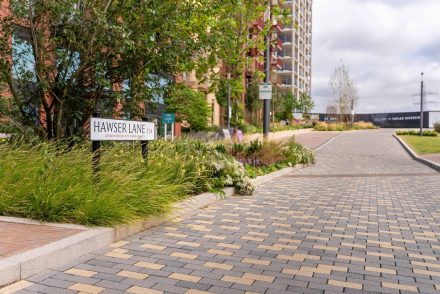
In practical terms, this will push designers towards more green infrastructure – like rain gardens, tree pits, or permeable paving – over hard-engineered tanks. It also puts greater emphasis on site permeability, shallow gradients, and surface flow routing to ensure interception and treatment before any discharge takes place.
A Call for Collaboration and Creativity
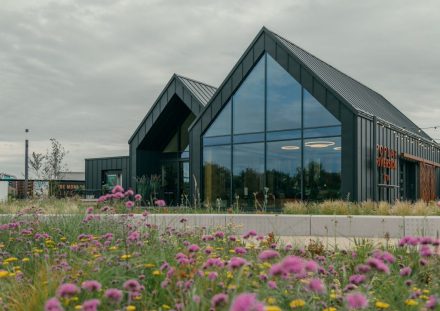
What these changes make clear is that SuDS can no longer be designed in isolation. Early engagement between architects, landscape architects, drainage engineers, and MEP teams is now essential. Design teams must work together from the outset to develop coordinated solutions that are functional and compliant.
And while the standards are ambitious, they also raise important questions about real-world implementation – particularly in constrained urban sites with very limited space:
• How will local authorities interpret the hierarchy in dense developments?
• Will there be flexibility for sites where harvesting or full interception aren’t feasible?
Moving Forwards
The 2025 National SuDS Standards challenge us to think differently. They ask us to design for reuse, not just disposal, and to work with nature and embrace it as an opportunity, not a constraint.
But success will depend on early engagement, strong coordination, and above all, a shared commitment to better outcomes.